
















The Threat Has Moved Down Market
Attackers used to chase large corporations. Today a great deal of their effort goes into small and mid-sized organizations, the kind that make up much of the business community in a county seat like Fairmont. The reason is economic. Smaller firms still hold payroll data, bank access, patient files and customer records, yet they rarely have a security team watching over them. The Verizon Data Breach Investigations Report keeps finding that people are at the center of most breaches: someone clicks, someone reuses a password, someone trusts a fake invoice.
Buying a single product does not solve a problem shaped like that. What works is depth: overlapping controls, each one designed to catch what another might miss.
How the Pieces Fit Together
Think of it as a series of checkpoints between an attacker and your data. Email security is the first, stripping out phishing messages and booby-trapped attachments. DNS protection is the second, refusing to connect a device to a known malicious site even after a click. Multi-factor authentication is the third, making a stolen password useless by itself. Endpoint detection and response is the fourth, spotting a laptop that suddenly starts encrypting files and cutting it off from the network. Regular patching shrinks the number of doors that can be forced in the first place, and security awareness training makes staff harder to fool.
Behind all of it sit backups that are isolated and tested. If every other layer fails, the business can still recover.
Somebody Has to Be Watching
Security tools generate alerts, and alerts nobody reads are worthless. Wolf monitors client environments 24/7, which matters because attackers prefer nights, weekends and holidays when offices are empty. A suspicious sign-in from overseas at three in the morning gets investigated then, not when someone opens their laptop the next day. Critical issues receive a response in a 6-minute average, and a 60-minute response guarantee is part of the agreement.
Measured Against Recognized Standards
Wolf builds its managed security around the NIST Cybersecurity Framework and the CIS Controls. Using public baselines means a Fairmont owner can see exactly where the organization stands, which gaps remain and why each control is worth the effort. It also makes cyber insurance questionnaires easier to answer honestly, since most of the questions insurers ask map directly to those frameworks.
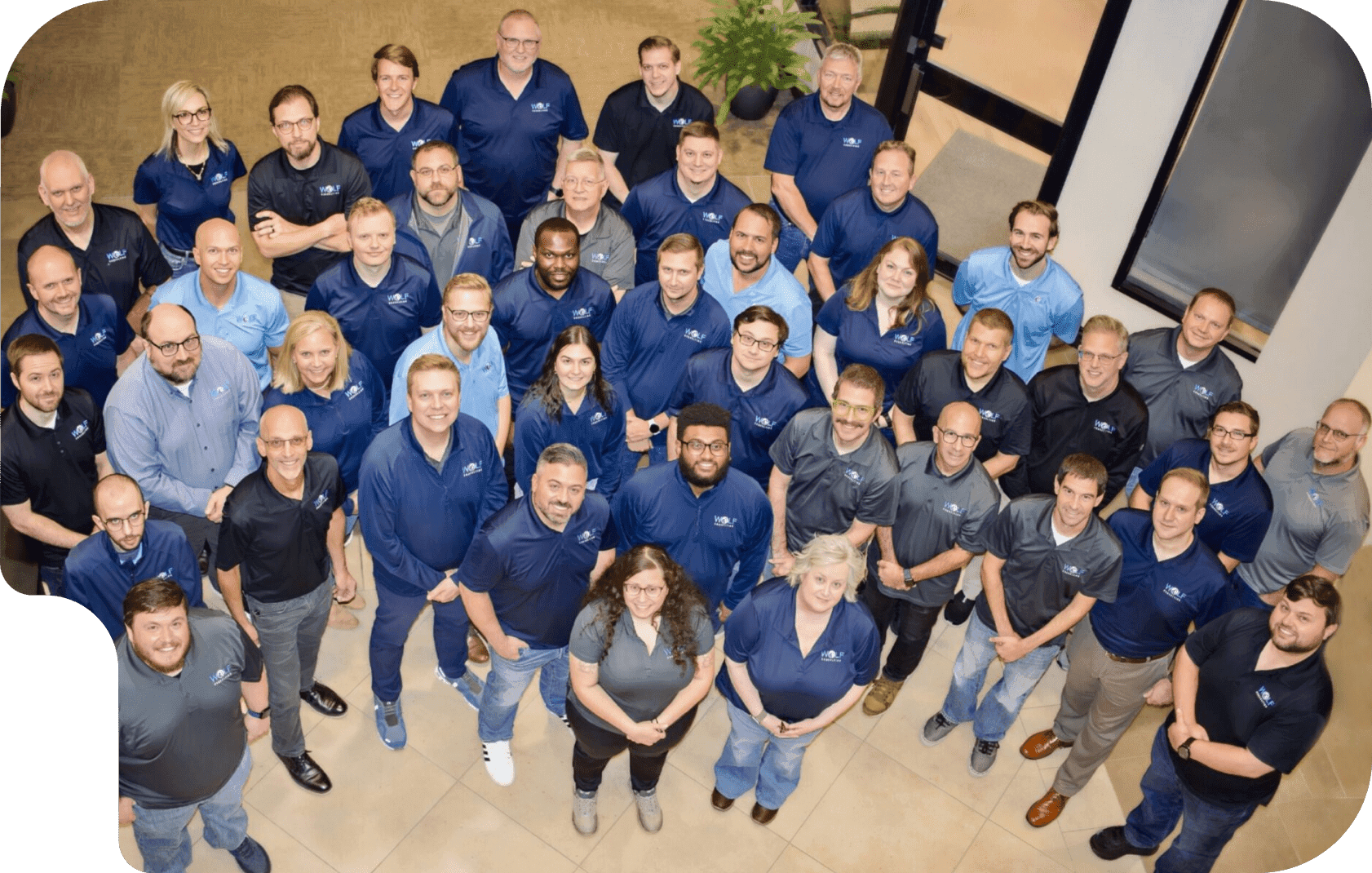
Wolf holds the GTIA Cybersecurity Trustmark and has secured around 250 organizations across the region. The point is not the credential itself. It is that protecting your organization becomes a planned, ongoing discipline handled by people accountable for the result, rather than a pile of software subscriptions that nobody checks after installation.